


Mirrors of the Soul—Illusions of Universal Identity: A Review of Liu Youju’s Exhibition at Burgh House in London
As spring quietly arrives in Hampstead, Liu Youju’s works have entered the heart of a London cultural landmark with profound philosophical reflection. Since April 30, 2025,Burgh House in North London, has been hosting Liu Youju’s solo exhibition “Mirrors of the Soul – Illusions of Universal Identity.” This is one of his most philosophically dense and visually experimental international exhibitions in recent years. Running until May 5, the show offers London’s art audience a journey across spirituality, identity, and visual semiotics.
A Cultural Dialogue in Hampstead
Burgh House itself is a symbol of culture. Built in 1704, this Georgian-era residence is both a silent witness to British aristocratic history and a space long cherished by intellectuals and artists. The presence of poet John Keats still lingers in the surrounding air, and now, modern artistic voices are revived within the Burgh House. Liu Youju’s work aligns seamlessly with the cultural fabric of this place — his creations never pursue surface-level flamboyance but rather root themselves in deep excavations of history, philosophy, and language.
Thus, this exhibition is far from a simple display of “Eastern art entering the West”; it feels more like a hidden ritual of consciousness — where the Chinese philosophical notion of “no-self” merges with contemporary Western theories of identity deconstruction, ultimately drawing the viewer into their own ontological reflection.
Third Thinking: Dismantling the Illusion of Identity
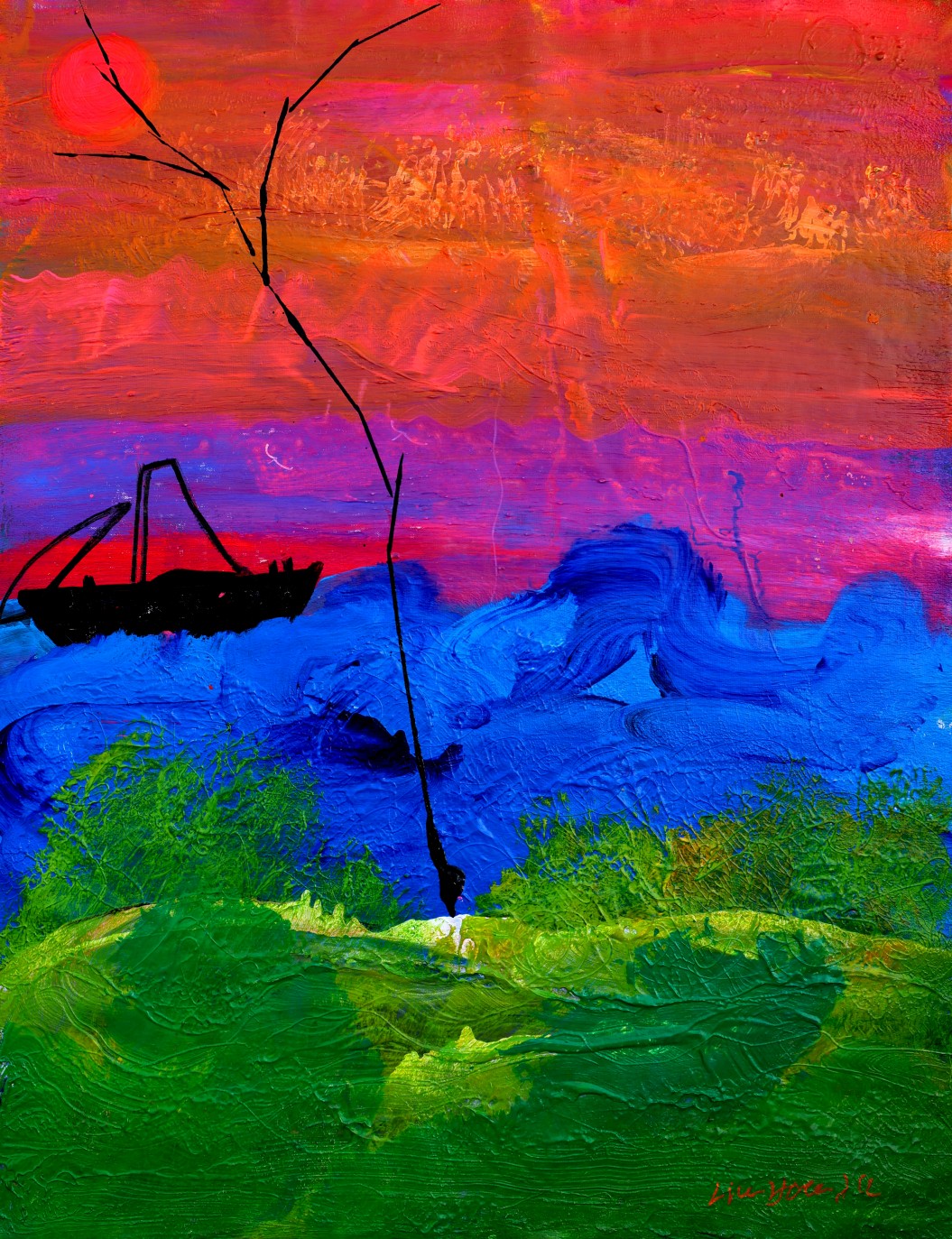
The title “Mirrors of the Soul – Illusions of Universal Identity” serves not only as a metaphor for the soul but also as a philosophical challenge to modern identity politics. In an era where global identities are fluid and cultural labels fragmented, Liu Youju resists categorizing his work as representative of “China” or the “East.” Instead, he constructs a third space for contemplating the illusion of universal identity. He calls this concept “The Third Thinking” — a spiritual dimension built between binary oppositions, involving folded cognition and penetrative intuition.
In this exhibition, we witness transitions between “titled” and “untitled,” the interplay of figuration and abstraction, and the confrontation of color and absence of color. These are not just explorations of formal language, but inquiries into the essence of identity itself. If identity is the product of cultural narrative construction, can art be the key to unraveling it? Liu Youju’s answer is affirmative — not through aggressive negation, but by allowing audiences to gradually perceive “truth” through the illusion.
A Visual Maze, A Philosophical Passage
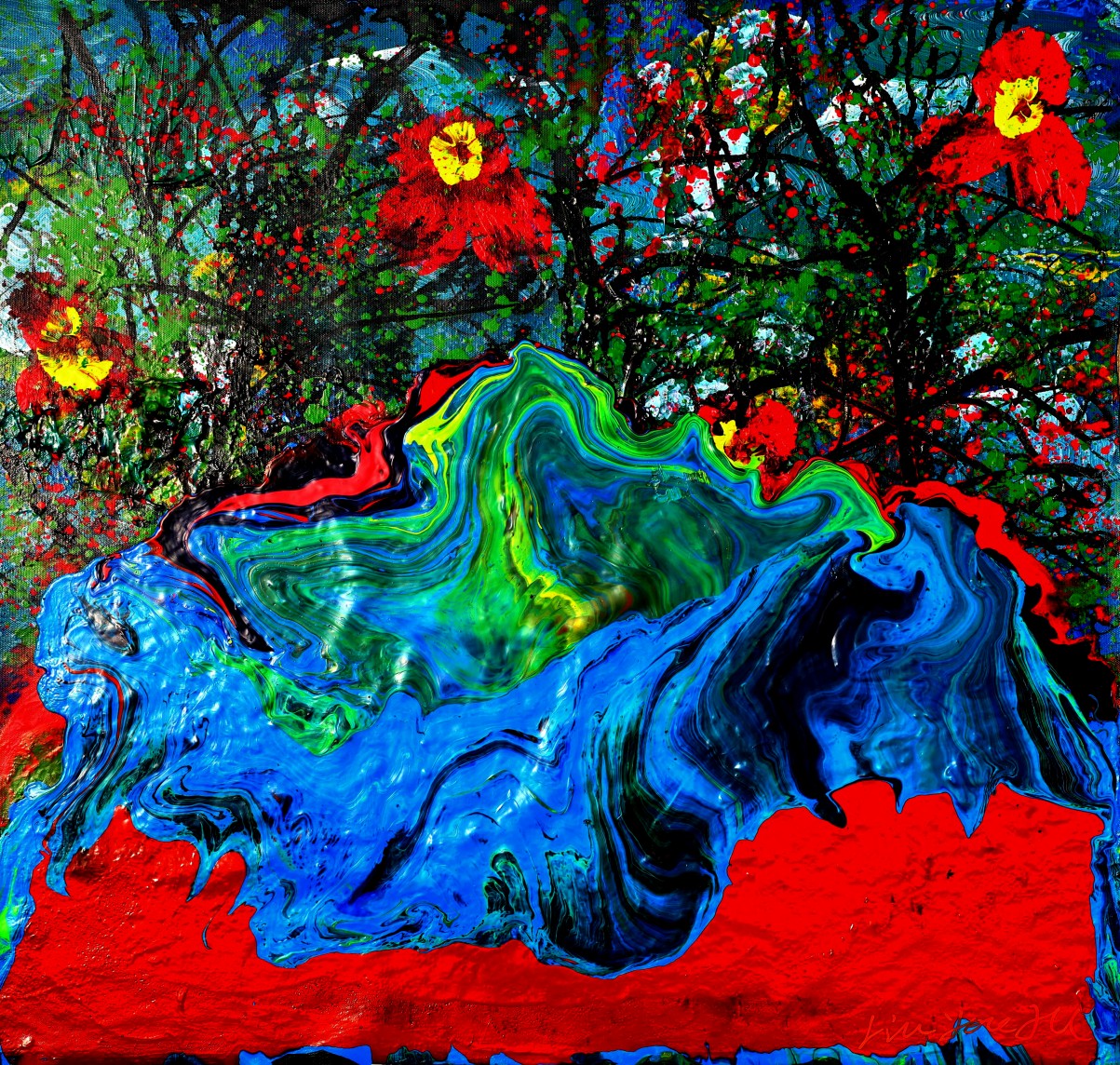
Upon entering the gallery, viewers immediately encounter a sense of contemplative stillness. The extremely restrained brushwork, repetitive lines, and structured voids all suggest the presence of nonlinear time. What may appear abstract is, in fact, filled with fragments of language, deconstructed pictographic symbols, and transformed forms of calligraphy — a kind of “formless form” that captures fragments of the soul in perpetual becoming.
Liu Youju’s signature “Illusionism” reaches new depths here. He no longer confines himself to illusions on the canvas, but attempts to turn visual surfaces into interfaces of consciousness. Take for example the piece Untitled – Fold 1: it appears almost empty at first glance, yet under shifting light and angles, subtle traces, hidden words, and “invisible images” emerge from the shadows. This “dematerialized” approach encourages the viewer to participate in a deconstruction of seeing itself — a reflection on the boundaries of perception.
A Non-Commercial Choice: The Meaning of Burgh Housey
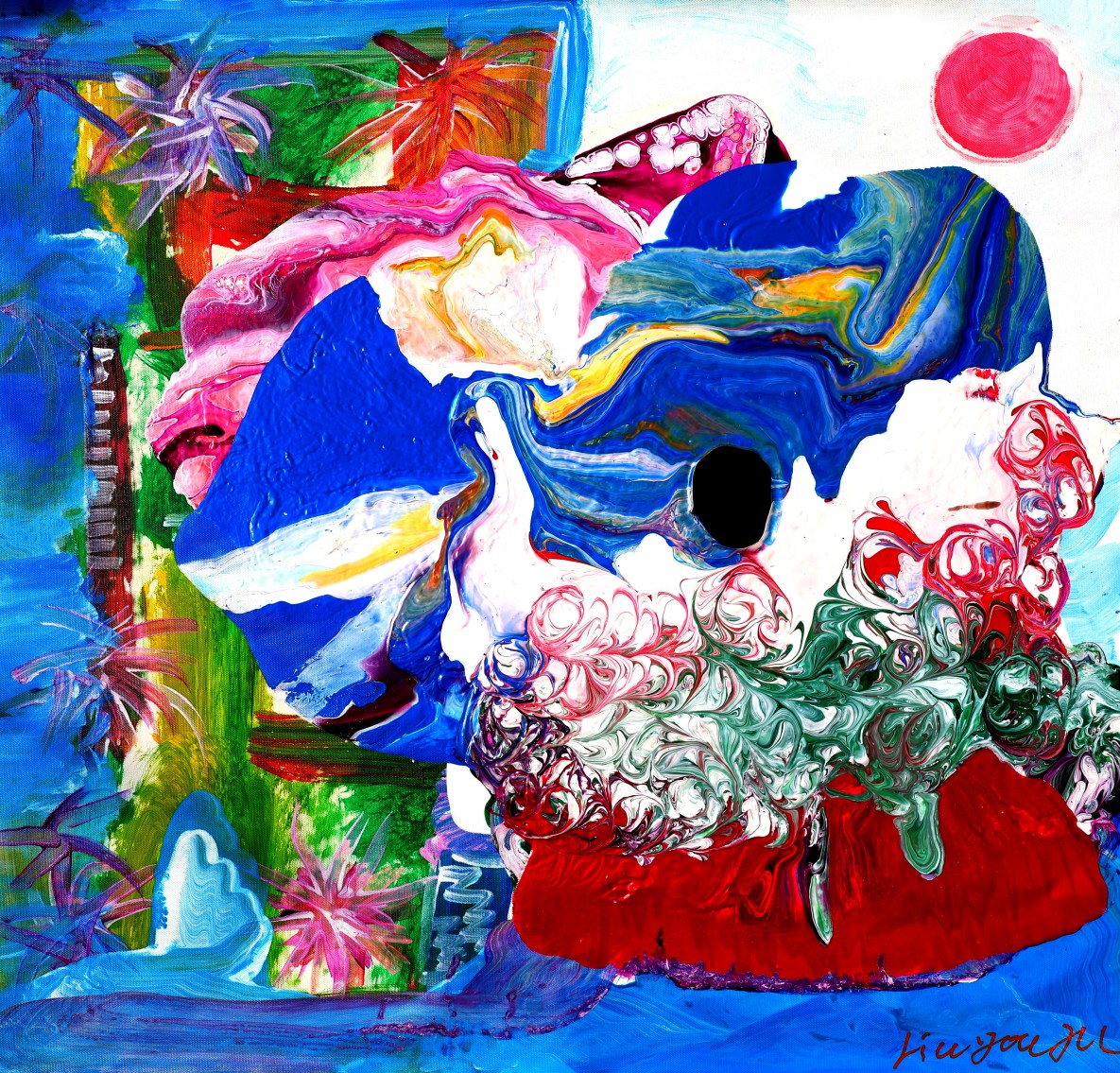
Choosing to hold a solo exhibition at the Burgh House is, in itself, a strategic artistic gesture. Unlike the mainstream galleries and auction houses of London’s high-end art scene, this quiet and historically rich venue serves more as a sanctuary of cultural conscience. Free from the influence of commercial hype, it preserves a solemnity that returns to art’s foundational questions.
Liu Youju’s artistic context resonates powerfully with the gallery’s commitment to “locality,” “independence,” and “intellectuality.” Without leveraging any state exhibition resources or market-driven publicity systems, he has earned growing international recognition purely through the originality of his thought and the visual depth of his works.
Looking Ahead: The Transmission of the Soul’s Mirror
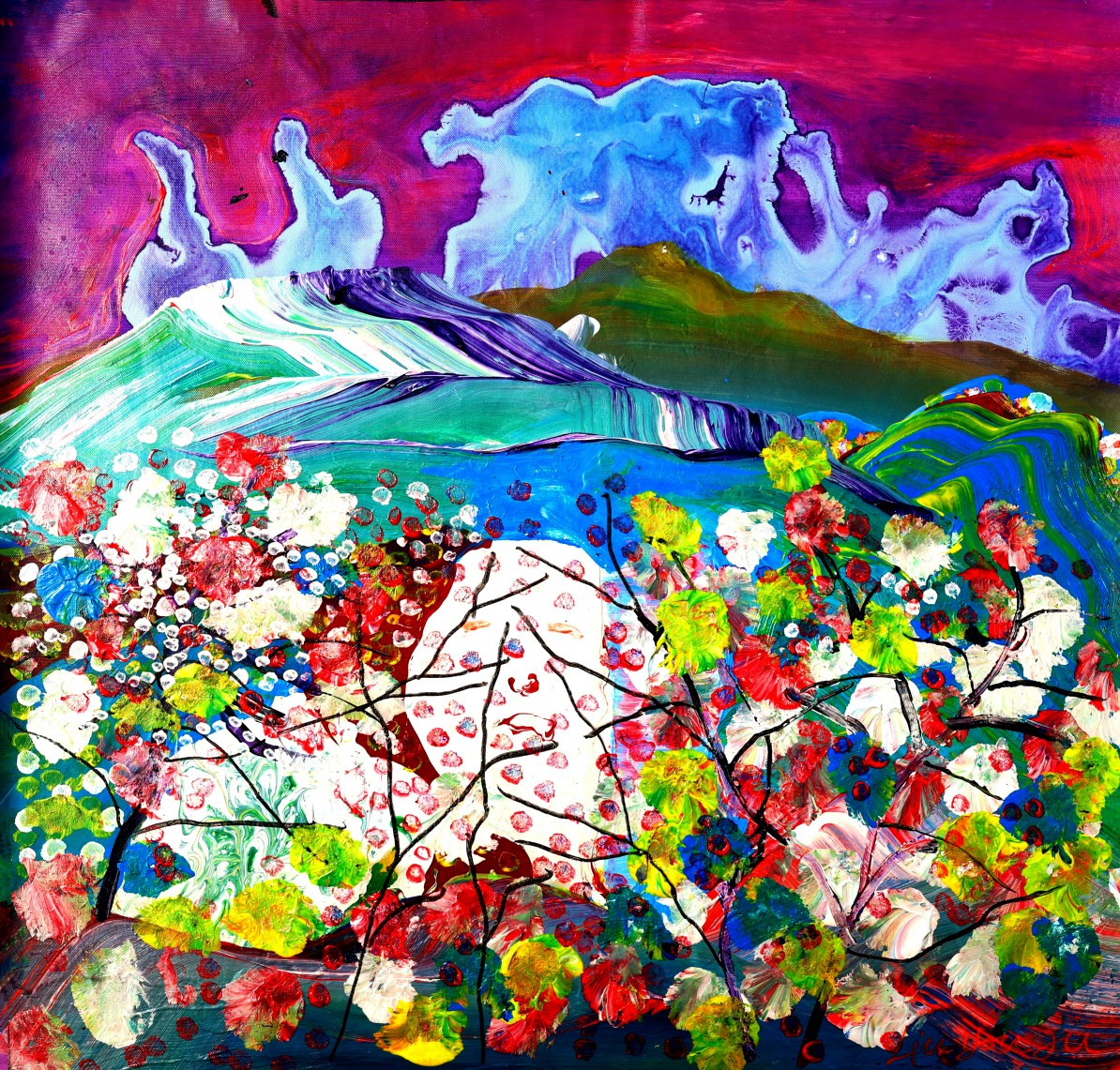
Though the exhibition concludes on May 5, 2025, its “aftershocks of thought” will likely persist far beyond. Liu Youju’s ongoing artistic-philosophical experiment, grounded in “Third Thinking,” is beginning to evoke a response among intellectual communities across East and West. In an age of global identity anxiety and cultural redefinition by artificial intelligence, his work offers not just aesthetic solace, but a spiritual-philosophical invocation.
One might say: Liu Youju’s works do not simply express the soul — they attempt to become the mirror of the soul itself. And as you gaze into that mirror, perhaps it is your soul that is, in turn, gazing back at you.

